

Founded on June 10, 1926, the Three Arts Club has spent nearly a century enriching the cultural life of Habersham County through the appreciation and promotion of music, literature, and art. This year, the club will proudly celebrate its 100th anniversary, marking a remarkable milestone in its long and distinguished history.
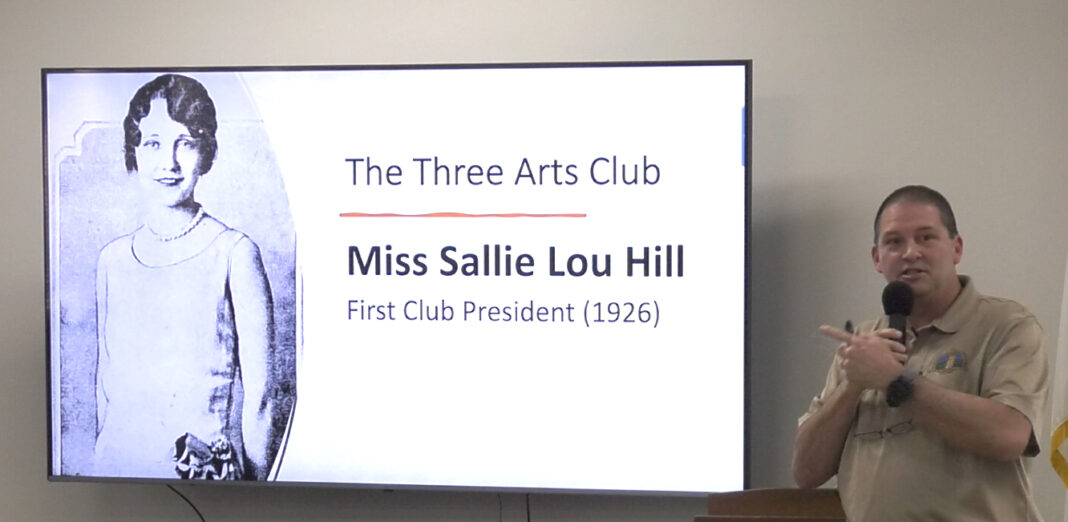
The club was organized with 29 charter members, united by a shared belief that the arts play a vital role in building stronger individuals and communities. A newspaper article published on June 17, 1926, details the club’s founding vision and early leadership, including its first president, Sallie Lou Hill, a respected local leader and advocate for cultural enrichment.
The original article emphasized the importance of cultivating beauty, discipline, and inspiration through the arts, noting that music, literature, and art were essential not merely for recreation, but for the intellectual and emotional development of both individuals and society. That guiding philosophy has remained at the heart of the Three Arts Club for generations.

Sally Higgins, Carole Jackson, Alice Medley, Sue Popham, Sue Blair, Barbara Strain, Jan Grizzle, Shirley Burton, Dianne Cody, Shirley Wright, Delores Anderson, Debbie Drew Godwin, Andrea Harper, Kathy Fairburn, Janis Stapleton, Jean Patrick, Jane Ferguson, Donna Trotter, Maria Almagno/Photo Habersham News
Today, the club’s legacy was celebrated with a special presentation by Peter Madruga, president of Habersham History, who delivered a compelling and well-received talk on the club’s illustrious history. Drawing from original newspaper accounts and archival materials, Madruga highlighted the club’s founding ideals, early members, and its lasting impact on the cultural life of the community.
Adding a special visual tribute to the occasion, club member Sally Higgins attended the event dressed in period attire from 1926, honoring the era of the club’s founding and paying homage to Miss Sally Lou Hill, the club’s first president.

As the Three Arts Club looks ahead to its centennial celebration, it stands as a testament to the enduring power of the arts and to the women who, for 100 years, have believed that nurturing creativity, learning, and beauty is both a social duty and a privilege.