

A newly introduced proposal at the Georgia State Capitol could dramatically reshape how property taxes are collected across the state, including in Habersham and Rabun counties.
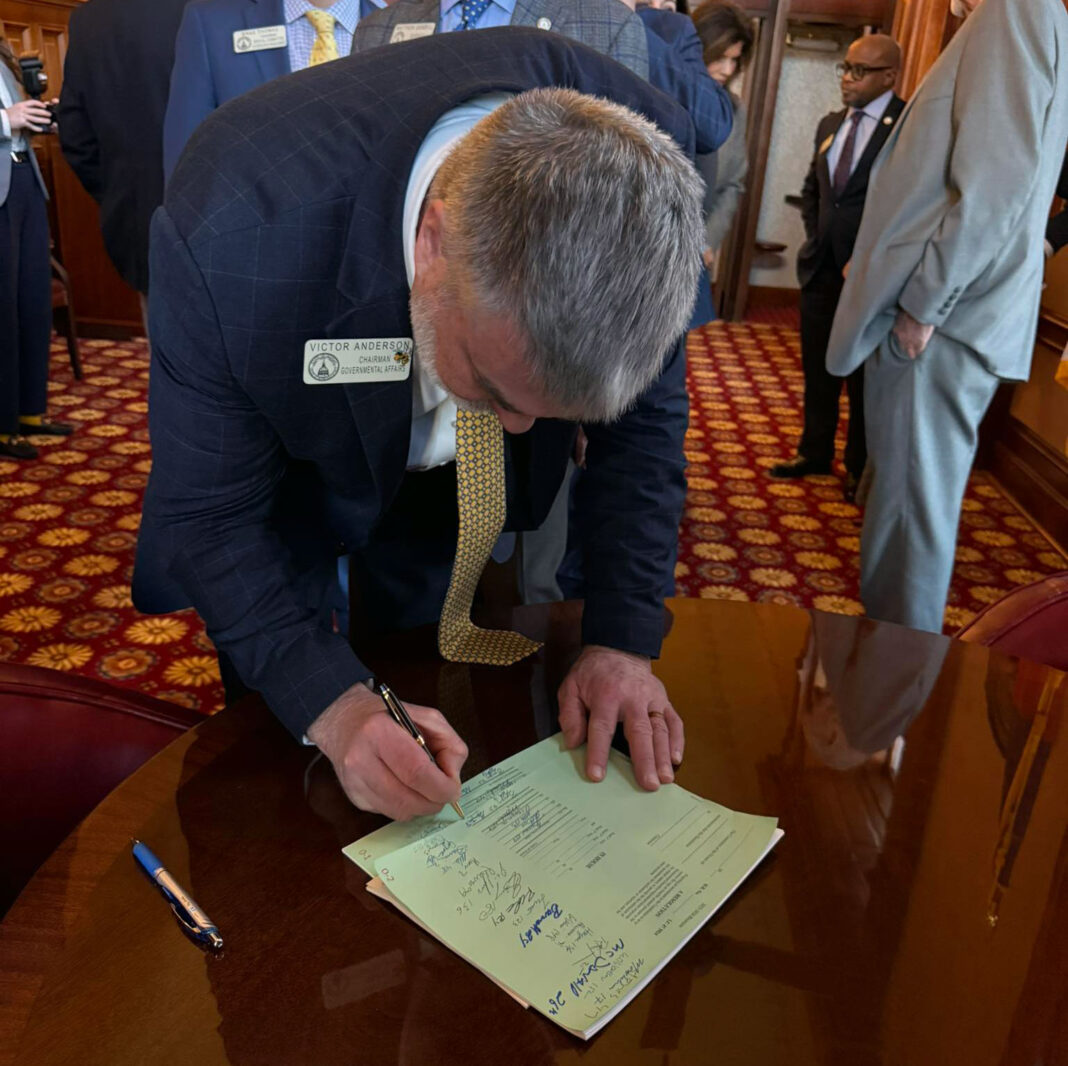
Georgia House District 10 Representative Victor Anderson recently spoke with Habersham News about legislation introduced this week that would, over time, eliminate most property taxes on homestead properties—the primary residences of Georgia homeowners.
Anderson emphasized that the proposal is separate from House Bill 581, which dealt with a floating homestead exemption tied to inflation. The new effort includes two pieces of legislation: a resolution calling for a constitutional amendment and a separate enabling bill that would take effect if voters approve the amendment.
What the Proposal Would Do
If approved in its current form, the legislation would phase in changes over several years, ultimately reducing the traditional property tax portion applied to homestead properties to zero by 2032. The exemption would apply to a homeowner’s primary residence and up to five acres of land.
Rather than eliminating all local charges, Anderson explained that counties, cities, or school systems could still impose specific line-item fees for designated services, such as existing bond obligations. In Habersham County, for example, hospital-related debt currently appears as a separate charge on property tax bills and could continue under this framework.
The core property tax calculation—based on assessed value multiplied by the millage rate—would be the portion gradually phased out.
How Local Governments Would Replace Revenue
To offset the loss of homestead property tax revenue, the proposal would allow for expanded use of local sales taxes, pending voter approval. Anderson described the shift as moving from a property-based tax to a consumption-based system, meaning visitors and non-residents who shop locally would help fund services.
He noted that the impact would vary significantly by community, depending on existing tax structures, debt obligations, and retail activity. Anderson said he plans to meet with leaders from Habersham and Rabun counties to better understand how the proposal could affect the region.
Commercial properties, rental properties, and non-homestead parcels would continue to be taxed under current rules, including periodic reassessments.
Impact on Homeowners and Renters
Under the proposal, homeowners would still pay property tax on a homestead during the first year after purchasing a home. After that initial year, the homestead exemption would apply fully once the phase-in is complete.
Renters would not directly benefit from the homestead exemption and could see higher costs through increased sales taxes. Anderson acknowledged that while renters would not receive property tax relief, the broader goal is to reduce the burden on homeowners while spreading costs across consumption.
Where the Legislation Stands Now
The proposal has not yet passed the House and is still in the early stages of the legislative process. The constitutional amendment resolution has been assigned to the House Ways and Means Committee, and the enabling legislation is expected to follow.
Both measures must clear committee hearings, pass the Georgia House and Senate, and—because of the constitutional amendment—ultimately be approved by Georgia voters statewide.
Anderson said the proposal has significant early interest, with more than 100 lawmakers listed as sponsors, but emphasized that support levels will be evaluated during committee discussions.
“This would be a fundamental reimagining of Georgia’s property tax system,” Anderson said, describing the proposal as transformational but still a work in progress.
Habersham News will continue to follow the legislation as it moves through the General Assembly and report on its potential local impact.